
Embedded Performance Psychology
Helping exceptional people perform exceptionally, consistently and sustainably under pressure.
I work as a fractional, embedded performance psychologist for hedge funds, investment banks, proprietary trading firms and asset managers. Together, we examine how people make decisions, respond to setbacks and challenge each other when capital and reputations are at stake.
Discuss a PartnershipCommercial benefits
The partnership aims to support sustainable high performance and sharper decision-making. Earlier conversations about pressure can help firms strengthen retention and psychological resilience. Better feedback, constructive disagreement and recovery habits can also improve interpersonal effectiveness and wellbeing.
The strategic partnership
Executive coaching gives a leader space to work on individual goals. An employee assistance programme offers a route to personal support. Standalone training introduces skills to a group. An embedded partnership complements all three by giving your people regular access to someone who understands the desk, its decision cycle and its commercial pressures.
We agree priorities with the sponsor, then return to live decisions and working habits over time. Individual conversations are confidential within agreed boundaries. We establish at the outset how wider organisational themes can be raised while protecting individual privacy.
The Psychological Performance Model
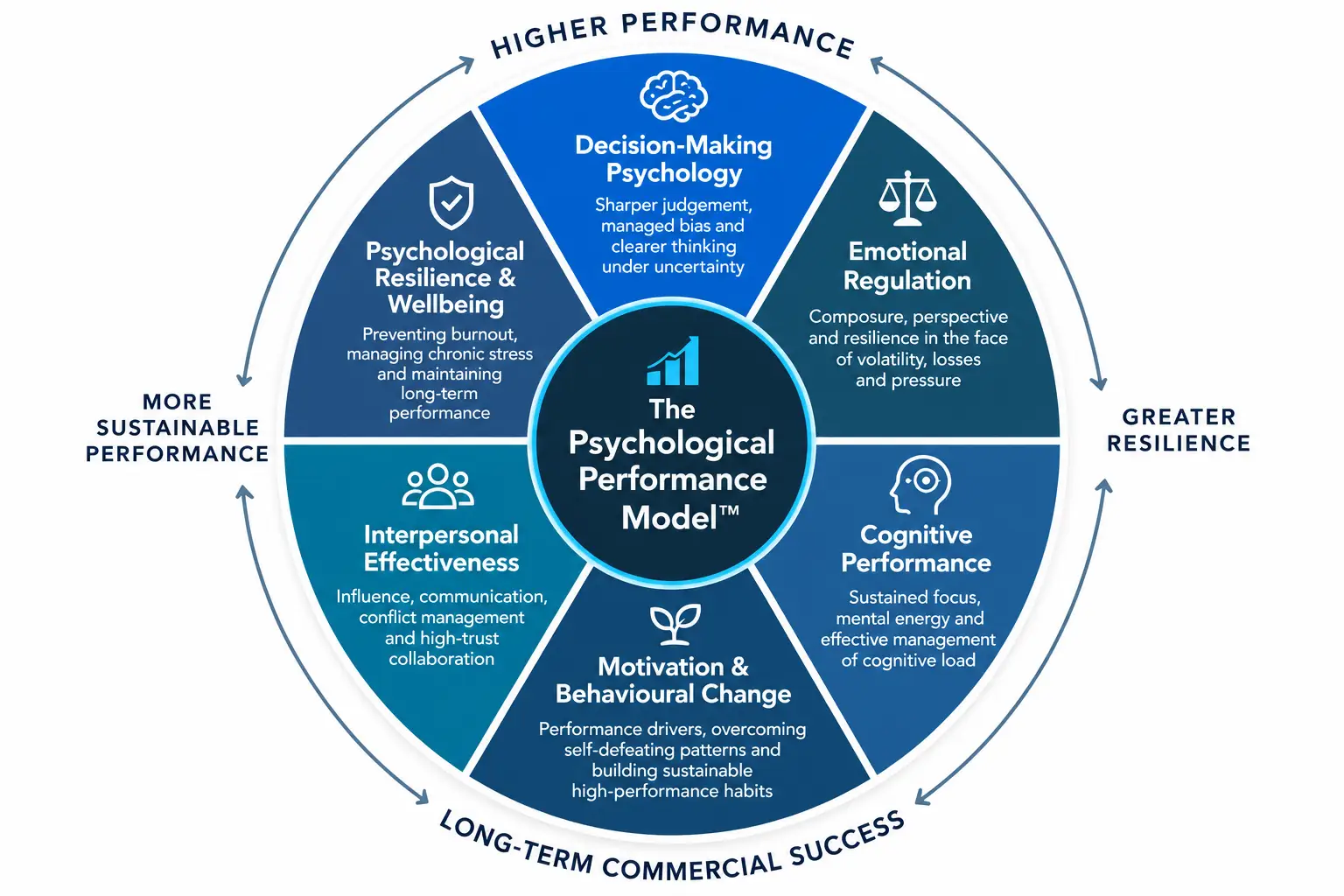
Six domains form a practical framework informed by psychological research. The starting point is a situation your people recognise in their own work.
Decision-making psychology
A portfolio manager can separate the quality of an investment thesis from its latest return and identify what evidence would change their mind.
Emotional regulation
A trader can recognise the urge to recover a loss immediately and create space for a deliberate next decision.
Cognitive performance
An analyst can protect attention during earnings season and use a short pre-decision check when competing signals multiply.
Motivation and behavioural change
An investment professional can turn a repeated intention, such as recording the rationale for a trade, into a routine that survives a busy day.
Interpersonal effectiveness
An investment committee chair can invite dissent before sharing their own view, giving junior colleagues room to challenge a crowded position.
Psychological resilience and wellbeing
A desk leader can recognise cumulative strain, open a confidential conversation and agree practical adjustments during sustained volatility.
Three pillars of intervention
Performance optimisation
Build on existing strengths. A portfolio manager might refine a decision journal to spot when their judgement is most reliable.
Performance protection
Identify early signs of overload and adjust working routines to reduce the risk of impaired judgement, exhaustion and burnout.
Performance restoration
Rebuild confidence and effectiveness after a drawdown, a difficult review or a psychological setback. Agree a manageable return to the decisions that feel hardest.
What the partnership looks like
Confidential individual sessions and proactive check-ins establish a regular point of contact. During volatility or commercial pressure, the work can focus on the next decision, a difficult conversation or recovery after a demanding period.
Leadership and team coaching extends this work to the conditions around the individual. We can examine whether meeting structures discourage dissent or whether workload makes sound routines difficult to sustain. Where someone needs specialist psychological care, we discuss appropriate support and referral pathways.
Flexible contractual arrangements
A three-month pilot gives us time to agree a focus, establish trust and review what is changing. Half a day, one day or two days a week can be reserved for fractional embedded support. We tailor the arrangement to the size of your team, its working patterns and the level of access people need.
Why work with me?

My clinical background is in counselling psychology. I bring that experience to my work in business psychology, executive coaching and leadership development. My financial services experience includes leadership work with banking professionals, and my approach draws on behavioural science to make everyday decisions and working relationships easier to examine. In my book Clear Minds, Great Leaders, I explore how hidden biases shape whose judgement we trust and how we lead under pressure.
Arrange a confidential exploratory conversation
Where does pressure most affect the quality of decisions in your firm? Let’s discuss what you are seeing, who would benefit from support and what a focused pilot could look like.
Discuss a Partnership